Looking for a horse-friendly lifestyle in the South Bay without giving up convenience or community? Rolling Hills Estates stands out because equestrian living here is not just a private property feature. It is part of the city’s identity, trail system, and long-term planning. If you are considering a move to this part of the Palos Verdes Peninsula, it helps to understand both the lifestyle appeal and the practical details. Let’s dive in.
Why Rolling Hills Estates Feels Different
Rolling Hills Estates is explicitly described by the city as an equestrian community. Since its incorporation in 1957, the city has tied its vision to open space, rolling hills, and the equestrian lifestyle. That identity still shows up today in the public landscape, from white three-rail fencing to an extensive trail network.
For you as a buyer, that matters because equestrian living here goes beyond finding a home with space for horses. The city’s own planning documents describe a community where equestrian use helped shape urban design, recreation, and neighborhood form. In simple terms, you are not just buying a property. You are buying into a city that was built with this lifestyle in mind.
Equestrian Amenities Across the City
One of the biggest draws in Rolling Hills Estates is the public equestrian infrastructure. The city says it owns and maintains seven parks, 25 miles of equestrian trails, and 10 miles of bicycle paths. City pages also reference more than 20 miles of bridle trails, showing just how central trail access is to everyday life here.
That trail network is a major reason horse-oriented buyers are drawn to the area. According to the city’s General Plan, Rolling Hills Estates has nearly as many miles of horse trails as city streets. The same plan notes that the trail system connects equestrians to most parts of the city.
The city also offers public riding rings and the Peter Weber Equestrian Center. For buyers who want equestrian access without building out a full setup at home, those community-level resources can be a meaningful advantage.
Public Riding and Boarding Options
The city states that it operates public riding rings and that the Peter Weber Equestrian Center serves as the municipal boarding stable. The city also points to the center for boarding, trailer storage, and training. That gives you more flexibility if you want the lifestyle but do not need or want full horsekeeping on your property.
This can be especially helpful if you love trail access and the equestrian atmosphere but prefer a lower-maintenance home setup. In that case, your search can focus on location, layout, and access rather than only on horse facilities at the property itself.
What the Trail System Means for Daily Life
In many places, horse properties can feel isolated from the rest of the community. Rolling Hills Estates offers a different experience because the public realm supports equestrian movement and recreation. The city’s planning documents describe a trail system that helps connect riders to much of the city.
That said, trail use is not the same everywhere. Some trails are shared by bicyclists, pedestrians, and horse riders, while others are reserved for people on foot and on horseback. Buyers should understand that proximity to trails is a great feature, but it also comes with shared-use rules and local trail patterns that can shape your day-to-day experience.
Shared-Use Awareness Matters
The city even posts special crossing information in certain areas, including the corridor between South Coast Botanic Garden and Rolling Hills United Methodist Church. That is a useful reminder that access is not just about being near a trail on a map. It is also about knowing how that trail functions, who uses it, and how it connects to the places you want to go.
If equestrian access is high on your list, it is worth looking closely at how a specific property relates to the broader trail system. Two homes in the same city can offer very different experiences depending on nearby trail connections and use patterns.
Neighborhood Character and Lot Patterns
Rolling Hills Estates does not follow one single neighborhood formula. The city describes several distinct neighborhood units with different lot sizes and street patterns. Many residential streets also end in cul-de-sacs, which adds to the area’s quieter, semi-rural feel.
For buyers, that means it is best to think of Rolling Hills Estates as varied rather than uniform. Some areas may feel more directly tied to trail access and equestrian planning, while others may offer a more general estate-style setting. The city’s General Plan notes that many neighborhoods were designed with equestrians in mind and that proximity to trails can strongly influence neighborhood form.
Expect a Semi-Rural Feel
The city describes Rolling Hills Estates as a semi-rural equestrian community that retains much of its original character. That can be part of the appeal if you want a setting that feels more open and spacious than many surrounding areas in Los Angeles County.
At the same time, neighborhood-by-neighborhood variation is important. A property may have the look and feel you want, but the details of lot layout, fencing, and trail adjacency can still vary quite a bit. A careful home search should account for those differences.
What to Verify Before Buying a Horse Property
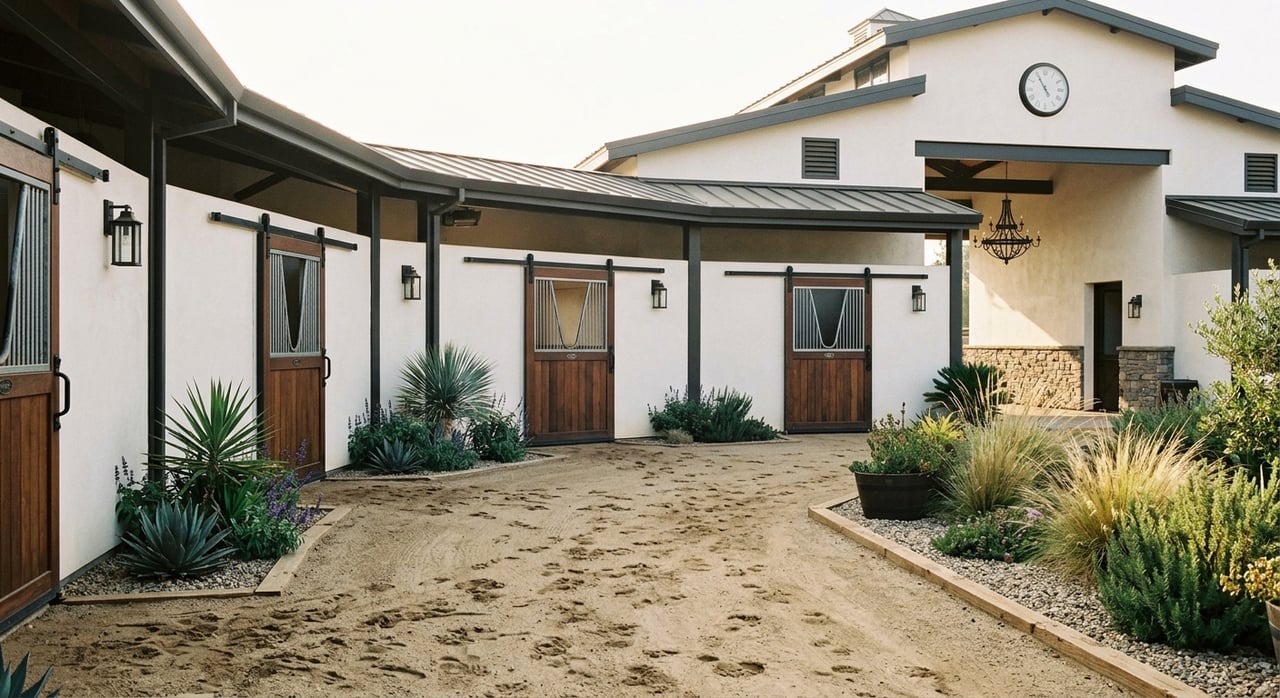
If you are planning to keep horses on your property, due diligence is essential. In Rolling Hills Estates, horsekeeping is only allowed in the Horse Overlay zone, according to the city’s FAQ. That makes the overlay designation one of the first things to confirm before moving forward.
The city also sets limits on horsekeeping capacity. It allows a maximum of four horses, with at least 800 square feet of horsekeeping area for the first horse and 300 additional square feet for each additional horse. The city notes that special-use permits may allow additional horses in limited cases.
Setbacks and Space Requirements
The city says the horsekeeping area must be at least 35 feet from any dwelling and at least 10 feet from a swimming pool. These rules can affect whether an existing setup works for your needs or whether future improvements are realistic.
Before you assume a property is turnkey for horses, it is smart to verify:
- The Horse Overlay designation
- Existing horsekeeping area size
- Setbacks from the home and pool
- Current fence approvals
- Whether planned stable or corral improvements appear feasible
These checks can help you avoid surprises after closing.
Fence Rules to Know
Fence standards are another important part of the picture. The city says front-yard fencing is generally limited to 24 inches. In the Horse Overlay zone, however, a 42-inch three-rail fence may be built to city standards.
That distinction matters if fencing is part of how you picture the property functioning and looking. If a home already has equestrian-style fencing, you will still want to confirm that it aligns with city standards and approvals.
Horsekeeping Comes With Property Planning
Owning a horse property is not only about stalls, corrals, and trail access. It also involves site planning and ongoing care practices. The city’s horsekeeping guidance emphasizes manure composting, runoff control, and thoughtful stable design.
The city identifies manure, urine, sediment, and pesticides as pollutants associated with equestrian activity. It advises covered manure storage, buffers, and siting wash racks, paddocks, and stables at least 50 feet from streams, canyons, storm drains, septic tanks, or leach fields.
Why Drainage and Layout Matter
For buyers, this is where the lifestyle side of the search meets the practical side. A beautiful lot may still need close review if you plan to keep horses on site. Drainage, siting, and usable layout can all affect how functional the property will be.
This is also why the right guidance matters during your search. Looking at a home through both a lifestyle lens and a property-function lens can help you make a more confident decision.
Is Rolling Hills Estates Right for You?
If your goal is to live in a place where the equestrian lifestyle is woven into the city itself, Rolling Hills Estates deserves a close look. The combination of public riding amenities, extensive trail access, open-space character, and horse-oriented planning gives the area a distinct identity within the South Bay.
It can be a great fit whether you want on-site horsekeeping or prefer to rely on community resources like the Peter Weber Equestrian Center. The key is matching your goals with the right property, neighborhood setting, and level of equestrian infrastructure.
If you are exploring homes in Rolling Hills Estates and want a thoughtful, low-stress approach to the process, DnG is here to help you evaluate both the lifestyle fit and the property details that matter most.
FAQs
What makes Rolling Hills Estates an equestrian community?
- The city describes Rolling Hills Estates as an equestrian community with open space, rolling hills, white three-rail fences, public riding rings, the Peter Weber Equestrian Center, and more than 20 miles of bridle trails.
How many equestrian trails are in Rolling Hills Estates?
- City sources state that Rolling Hills Estates maintains about 25 miles of equestrian trails, and city pages also refer to more than 20 miles of bridle trails.
Can you keep horses at any home in Rolling Hills Estates?
- No. The city says horsekeeping is only allowed in the Horse Overlay zone, so buyers should verify that zoning before assuming a property can accommodate horses.
What are the horsekeeping limits in Rolling Hills Estates?
- The city allows up to four horses, with at least 800 square feet of horsekeeping area for the first horse and 300 additional square feet for each additional horse, subject to local rules and limited special-use permit cases.
What should buyers check before purchasing an equestrian property in Rolling Hills Estates?
- Buyers should confirm the Horse Overlay designation, horsekeeping area size, setback requirements, fence compliance, and whether the property layout supports drainage, stable placement, and any future equestrian improvements.
Does Rolling Hills Estates offer boarding if you do not want horses on your property?
- Yes. The city points to the Peter Weber Equestrian Center for boarding, trailer storage, and training, which can support an equestrian lifestyle without full on-site horsekeeping.